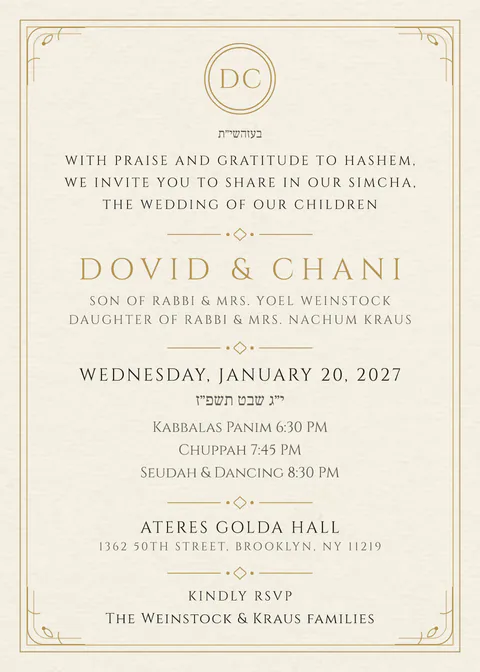
Black Tie
Black on ivory with spaced capitals and thin gold dividers — the formal, black-tie classic.
The guest view opens the sealed envelope with sample names; nothing is saved. Designing is free; you pay only when you send past the free allowance.
- CodeHZ0056
- Card languageEnglish · guests can switch to Lashon Kodesh and Yiddish
- SidesBoth sides on one card
- PriceFree — send to up to 40 households at no cost
- EnvelopeOutside Liner Card
Colours, fonts, the envelope and its liner, the wax seal, the stamp, the music and every line of text are yours to change in the studio.
For the same simcha
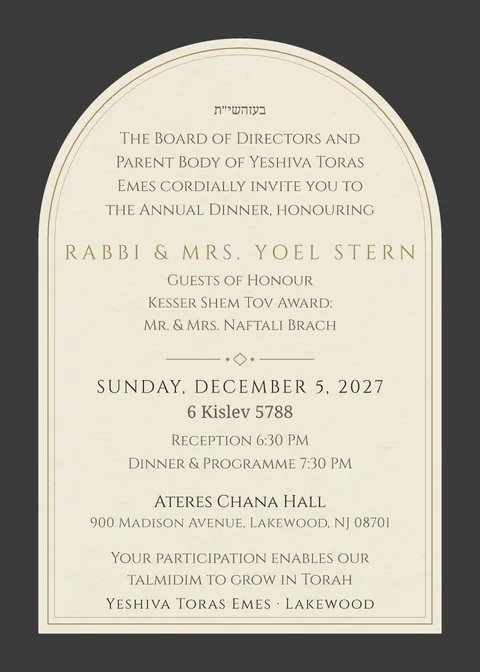
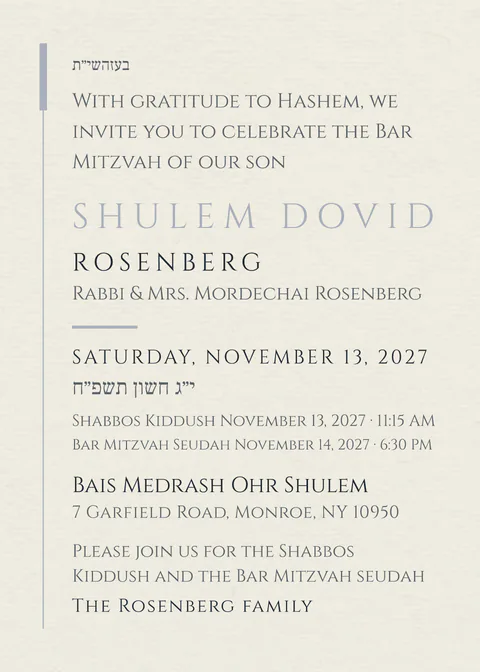
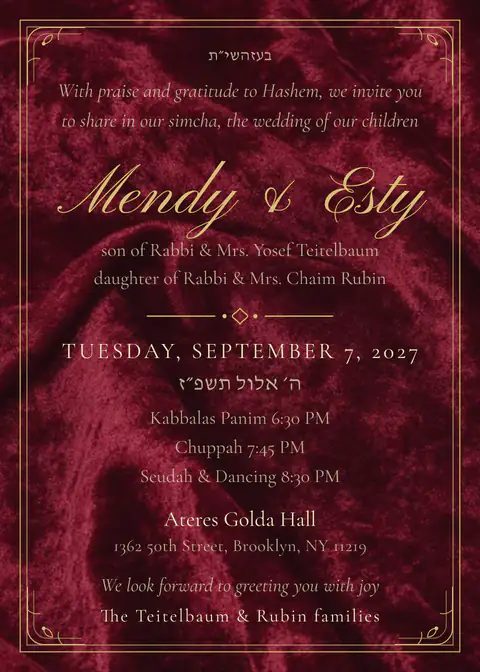
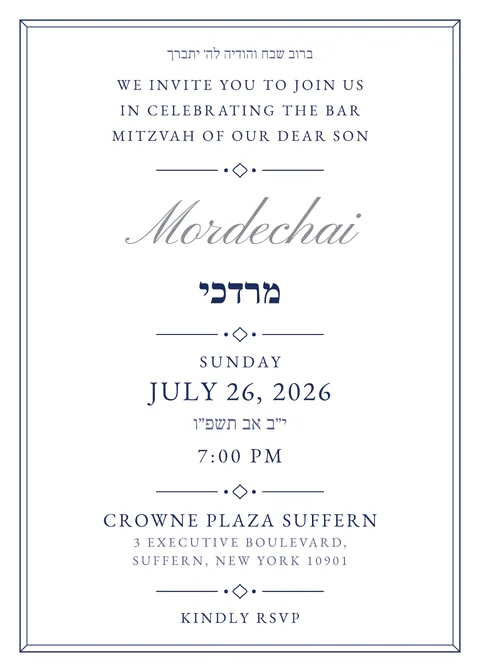
Other chasunah designs; a tenoyim card and a chasunah card can share one look.
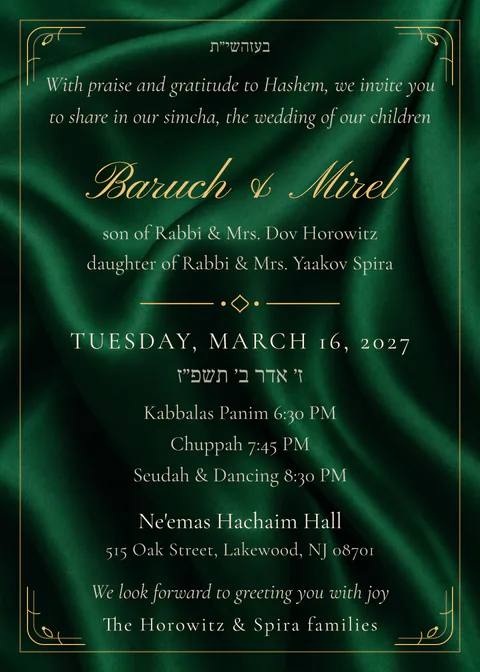

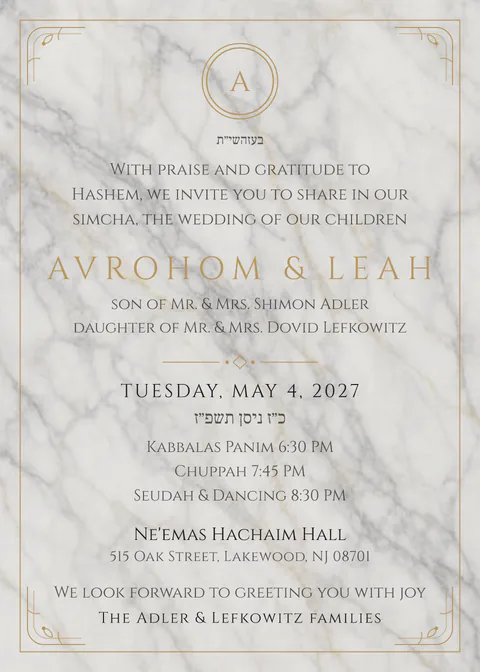
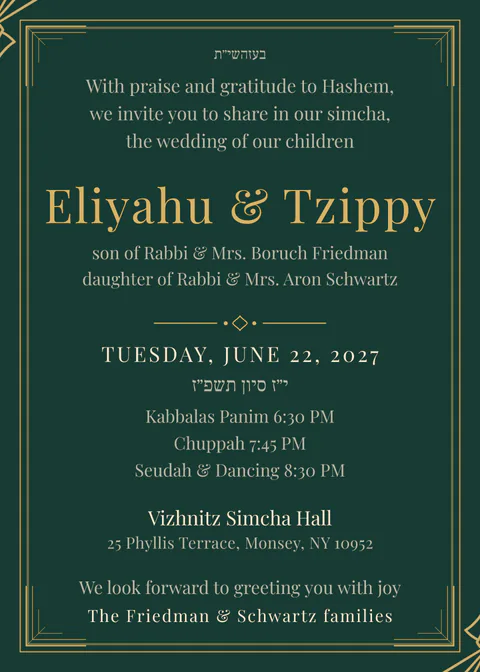
Like this one
The same colours and the same kind of card.
Questions about chasunah invitations
Can the card be in Lashon Kodesh on one side and English on the other?
Yes. On the Chasunah plan the card has two faces and the guest flips it with a button. On the other plans you write the card in one language, and guests can still switch the page to Lashon Kodesh, Yiddish or English.
Does the Hebrew date come out right for an evening chuppah?
Yes. The date is computed from the hall’s location and the time: a chuppah after shkiah carries the next day’s Hebrew date, and the card can show the “אור ליום” form with the parsha. You can override it by hand.
How do the chosson’s side and the kallah’s side each send their own list?
Each side gets its own sending link and pastes its own guests; every family still gets one personal link. The replies are counted per side and together.
How do guests reply?
Every family gets its own link, with their name on the envelope. The reply is two taps: coming or not, and how many seats. You see who opened and who answered, and the list exports as a spreadsheet for the hall. You can also switch the reply form off and use the link for directions only.
Does it work on a filtered phone?
The card is readable before any animation runs; the schedule, the maps, the calendar buttons and the reply form work without JavaScript, and a plain text version is one tap away. The message you send carries the names, the date and the hall as text before the link, so a guest whose phone shows no pictures still has the details.
What does it cost?
Designing, your guest list and a test send to yourself are free. Sending to up to 40 households is free; the Simcha plan is $49 for up to 400 households and the Chasunah plan $99 for up to 1,500 — one payment per invitation, no subscription. Pricing.
Start with Black Tie.
Write the words, see it on your phone, send it when it is right.
Start your invitation